Why Wildlife Art Creates Such a Strong Emotional Connection
Why a direct animal gaze in wildlife art holds our attention, and what that has to do with familiarity, symbolism and storytelling.
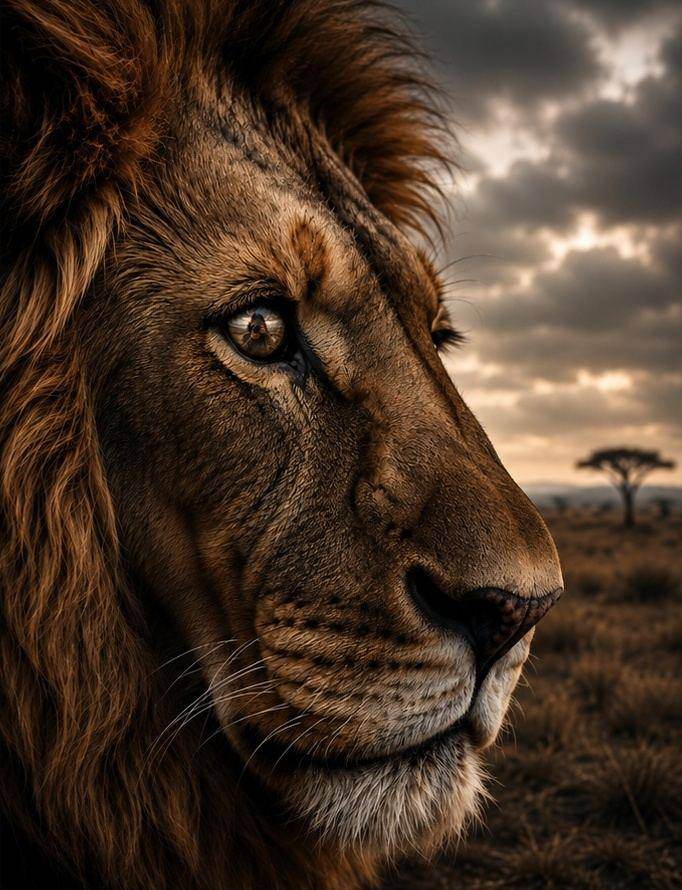
There's a particular feeling that comes from an animal looking directly out of a piece of art, rather than being captured mid-motion or in profile. It's harder to walk past. It asks something of you, even for a second.
That reaction isn't accidental, and it isn't really about the animal alone.
Eye contact does most of the work
Humans are wired to notice eyes and read expression into them, even across species. A direct gaze in a portrait, human or animal, tends to hold attention longer than a side-on view, because it reads as a form of contact rather than observation.
That's a large part of why a close, direct portrait of an animal can feel more powerful than a wider, more conventional wildlife photograph. You're not just looking at the animal. It feels, briefly, like it's looking back.
Familiarity in unfamiliar faces
Many of the expressions we read in wildlife art, intensity, calm, alertness, curiosity, are expressions we recognise in each other. An elephant's steadiness, a wolf's watchfulness, a gorilla's quiet weight: these aren't human expressions, but we interpret them through a human lens, and that familiarity is part of what makes the connection feel personal rather than purely visual.
Symbolism we already carry
We also bring existing associations to each animal before we've even registered the artwork. A lion already means something to most people before they've looked at the piece properly. A tiger carries a different charge again. That symbolism does some of the emotional work before the artwork itself gets a chance to add anything new.
Nature in modern spaces
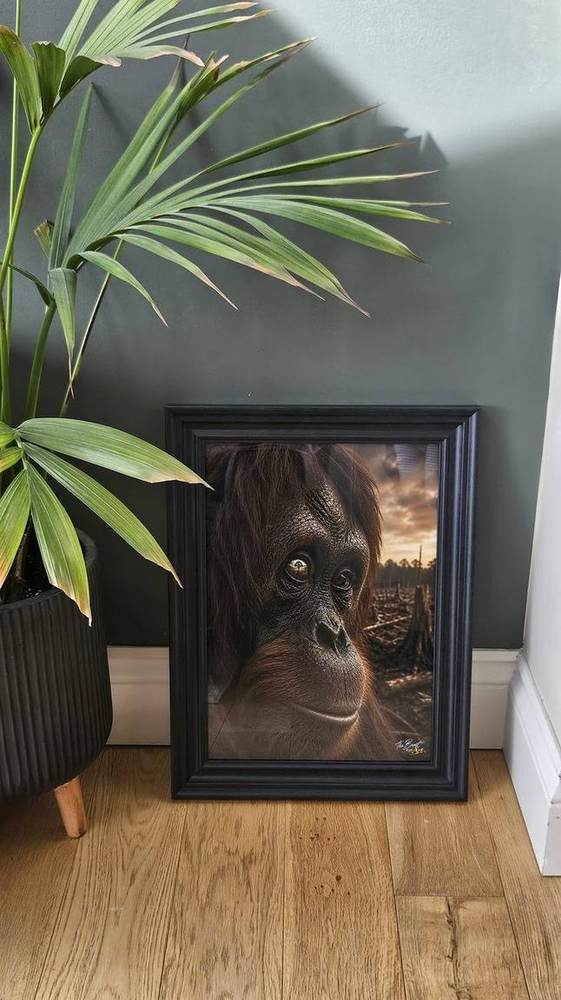
Most of us spend very little time around wild animals, and a lot of time in built, controlled environments. Wildlife art brings a small piece of something unscripted into a space that's otherwise entirely designed, which may be part of why it can feel so grounding on a wall at home or in an office.
Storytelling through portraiture
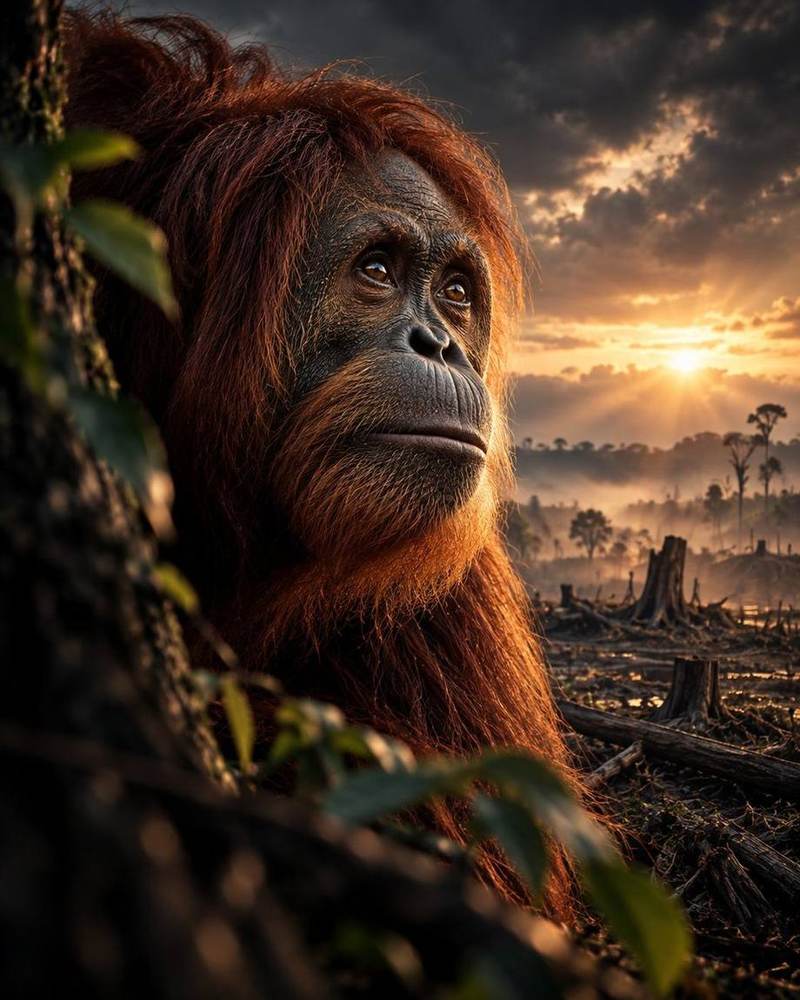
A straightforward wildlife portrait can carry a lot of this on its own. But a portrait that also places the animal within a wider story, a changing landscape, a sign of pressure on its habitat, adds a second layer. The eye contact draws you in; the context around it gives you a reason to keep looking rather than move on.
That combination is the idea behind Creating Through Their Eyes, the collection built specifically around asking what the world might look like from the animal's perspective, not just what the animal looks like.
Different animals, different connections
Not every piece connects in the same way. A lion's gaze tends to read as confident, almost confrontational. An elephant's feels steadier, more patient. A koala or an orangutan can feel unexpectedly vulnerable, even gentle. Part of choosing a piece well is noticing which of these registers with you specifically, rather than assuming one wildlife portrait will feel the same as any other.
Why it still matters alongside so many screens
Most of what we look at day to day moves, refreshes or demands a response. A still, direct portrait asks for the opposite: a moment of simply looking, without anything changing or asking for input. That stillness is part of why wildlife art can feel unusually calming in a home, even when the subject itself, a tiger or a gorilla, is anything but calm by nature.
A connection worth keeping on the wall
None of this requires a complicated reason. If a piece holds your attention longer than you expected, that's usually the connection doing its job. Explore Through Their Eyes and see which piece holds yours.
Lucy Goffin is the founder of The Beast in Me Art, a contemporary wildlife art brand focused on animal portraiture, storytelling and the changing relationship between wildlife and the world around us.