How to Frame a Fine Art Print
What to consider before framing a fine art print, from frame colour and mounts to glazing and hanging it safely.
A good frame rarely gets noticed, and that is exactly the point. Its job is to protect the print and support the image, not to compete with it.
If you've bought a fine art print, or you're deciding how to display one, here is what actually matters when choosing a frame.
Should fine art prints be framed?
Yes, in almost every case. A frame protects the paper from handling, dust and knocks, and it holds the print flat against the wall rather than letting the edges curl over time.
A fine art print on 308gsm paper, such as the prints in the Through Their Eyes collection, has enough weight and body to stand on its own briefly, but it is still a paper original rather than a sealed, ready-to-hang canvas. Framing is what turns it into a finished piece for the wall.
Black vs white vs natural wood frames
There is no single correct colour. It depends on the artwork and the room.
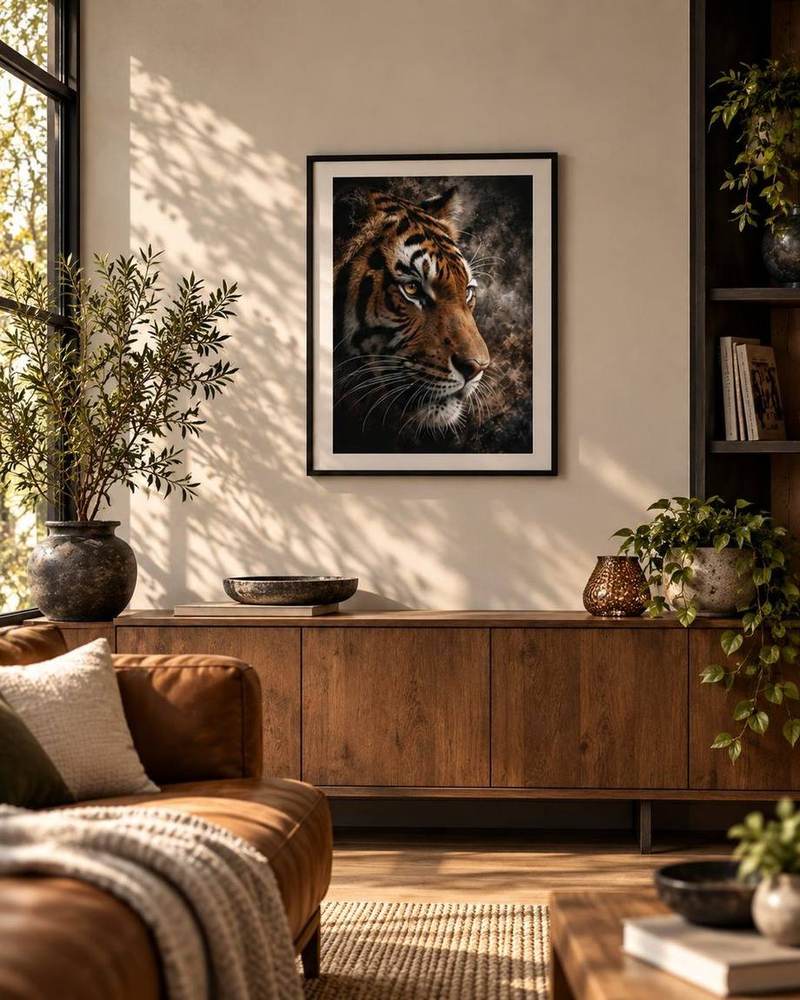
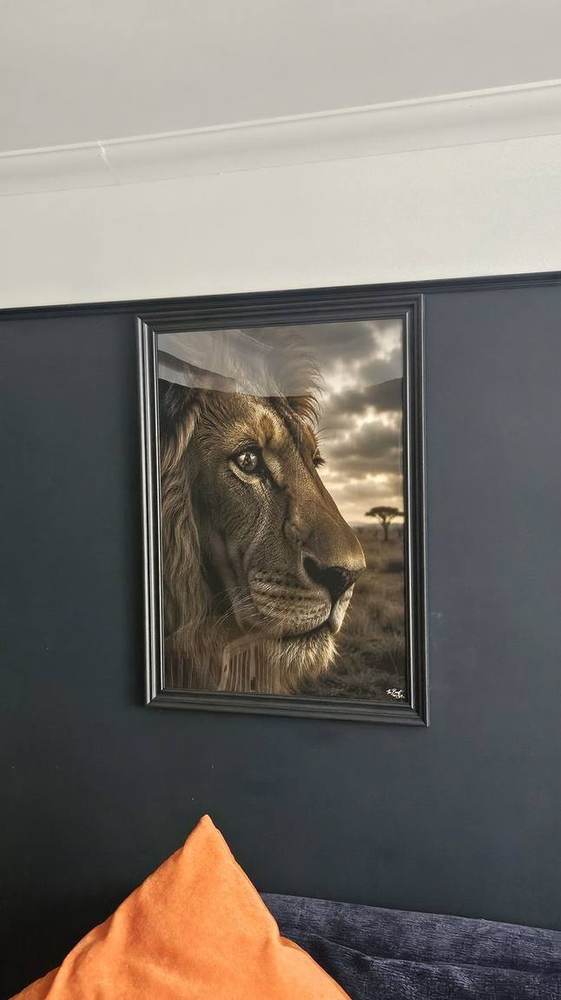
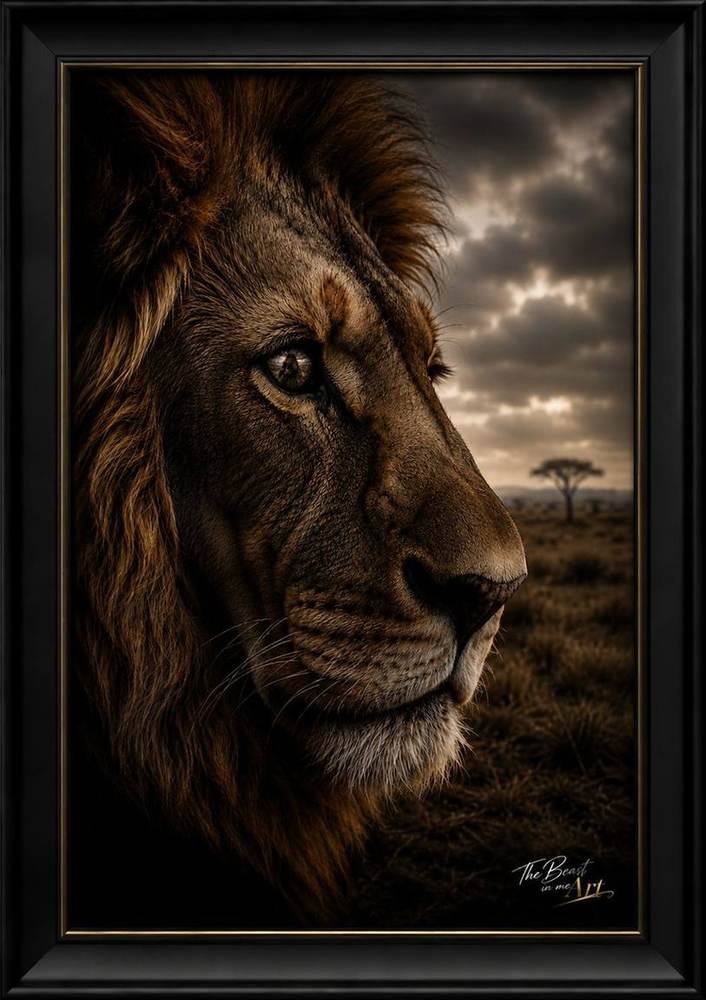
Black frames tend to work particularly well with strong wildlife portraits. The contrast gives the image a crisp, contemporary edge and keeps attention on the animal rather than the frame.
Natural wood softens the overall look and suits warmer, more organic interiors, especially where the room already uses timber, linen or stone.
White frames suit brighter, more minimalist spaces, and can work well where several pieces are grouped together and you want the wall to feel light and uncluttered.
Should you use a mount?
A mount (the border of card between the print and the frame) adds breathing space around the image and can make a print feel more considered on the wall, particularly in a smaller size such as A3.
It is a matter of preference rather than a rule. Many contemporary wildlife prints, including larger A1 pieces, look equally strong framed close to the edge of the image with no mount at all. If you're unsure, ask whoever is framing the piece to show you both ways before committing.
Glass vs acrylic
Both protect the print from dust and everyday handling. Glass is the traditional option and widely available at any framer. Acrylic (sometimes called Perspex) is lighter and more resistant to breakage, which can be worth considering for a larger A1 print or for a home with young children or pets.
Beyond that, the right choice generally comes down to budget and whoever is making the frame for you, rather than one option being clearly superior for wildlife art specifically.
Protecting artwork from direct sunlight
Like any printed or painted piece, a fine art print will last longest out of direct, prolonged sunlight. A spot that gets a little natural light through the day is generally fine; a wall in full, unbroken sun for most of the day is worth avoiding if you want the colours to stay true for as long as possible.
Hanging artwork safely
Use a fixing rated for the frame's weight, particularly for A1 prints, which are larger and heavier once framed. Two fixing points rather than one will keep a larger piece level and secure over time.
Framing for a gallery wall
If you're building a group of prints rather than a single statement piece, consistency matters more than any individual choice. Keep the frame colour and style identical across every piece, even if the subjects and sizes vary. It's this repetition, more than the artwork itself, that makes a collection of prints read as one considered group rather than a mismatched set.
Matching the frame to the rest of the room
A frame doesn't need to match your other furniture exactly, but it helps to echo something already in the room: a black frame alongside dark window frames or metal fittings, or natural wood picking up an existing sideboard or floor. The goal is for the frame to feel chosen, rather than like the first option at the shop.
Frame size vs print size
Always frame to the actual print size, A3, A2 or A1, rather than rounding up or down. If you haven't settled on a size yet, it's worth working that out first: see our guide to choosing the right size for your wildlife art.
Explore Through Their Eyes
Every Through Their Eyes print is supplied as a fine art original on Photo Rag 308gsm paper, ready to be framed in the style that suits your space. Explore the collection to find a piece worth framing well.
Lucy Goffin is the founder of The Beast in Me Art, a contemporary wildlife art brand focused on animal portraiture, storytelling and the changing relationship between wildlife and the world around us.