Wildlife Art for Living Rooms: How to Create a Strong Focal Point
How to choose and place wildlife art in a living room, from a single statement print above the sofa to a considered gallery wall.
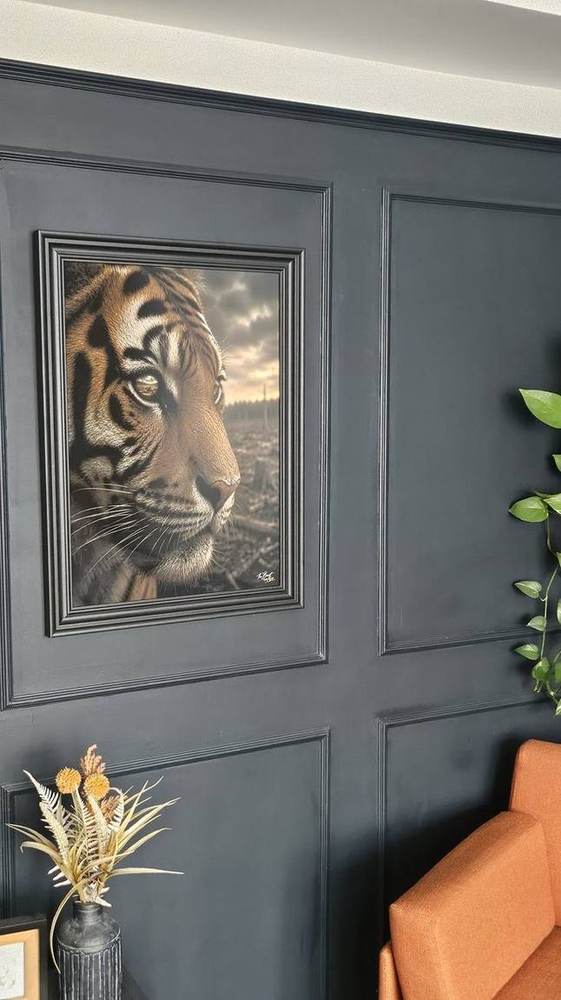
The living room is usually where a piece of wildlife art works hardest. It's the room guests see first, the room you spend the most time in, and the room where one strong image can set the tone for everything else.
Here is how to choose and position wildlife art so it earns its place above the sofa or the fireplace.
Let the artwork lead
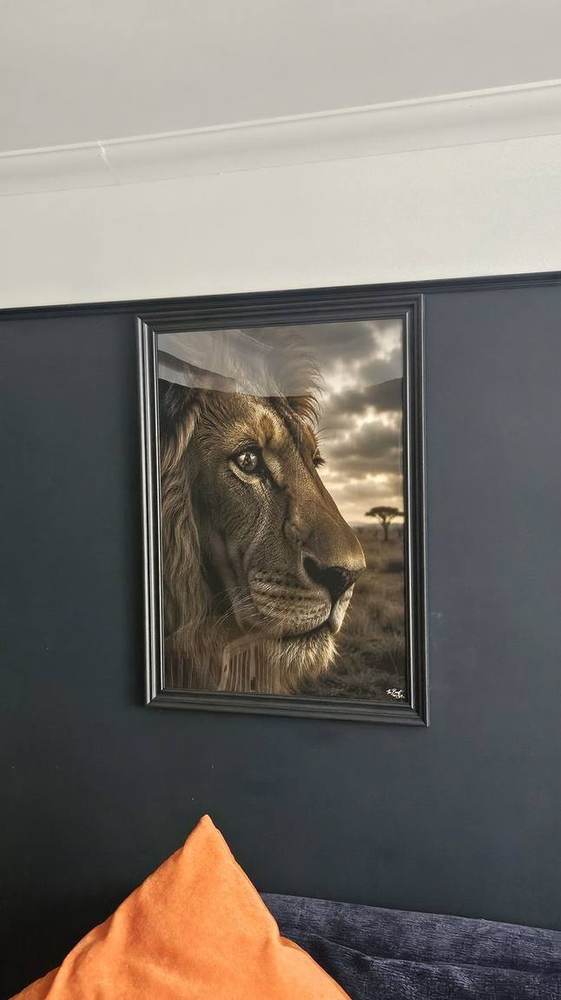
A large wildlife portrait, in A1, can act as the single focal point of a living room without needing anything else around it. Above a sofa or a fireplace, it gives the eye somewhere to land as soon as you walk in.
Resist the urge to surround it with smaller pictures straight away. Giving it space, what designers call negative space, makes the piece feel intentional rather than crowded.
Choosing the mood
Living rooms tend to be sociable spaces, so the animal you choose shapes the atmosphere more than people expect. A lion or tiger brings presence and a little drama. An elephant feels calmer and more grounding. A piece like Vanishing Kingdom, from the Through Their Eyes collection, combines that presence with a quieter, more reflective story, which can suit a room meant for both conversation and unwinding.
Positioning above a sofa
As a general guide, the artwork should feel proportionate to the furniture beneath it, roughly two-thirds the width of the sofa, with enough space above the frame to avoid it feeling squeezed under the ceiling. An A1 print works well here in most standard living rooms; A2 suits a smaller sofa or snug.
Positioning above a fireplace
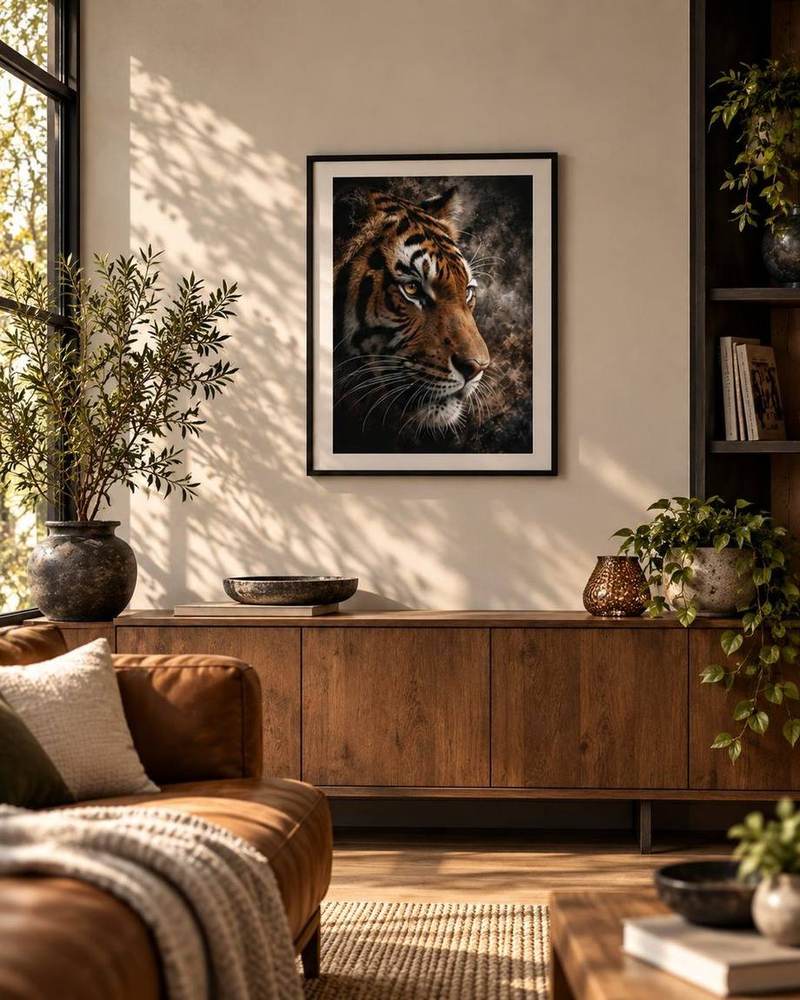
A fireplace already draws the eye, so the artwork above it needs to hold its own. A strong, simple portrait with a plain or softly blurred background tends to work better here than a busier composition, since the mantelpiece below often has its own clutter of objects competing for attention.
Pairs and gallery walls
If one large piece isn't quite right for your space, two smaller prints, in matching frames and hung at the same height, can create a similar sense of focus. For a looser, gallery-style grouping, keep the spacing and frame style consistent even if the subjects vary; it's what stops a group of pictures from looking like a random collection.
Positioning around a TV
Many living rooms now have to balance a television with everything else on the wall. Rather than competing with it directly, wildlife art tends to work better to one side, above a sideboard or in a dedicated reading or seating area away from the screen, where it can hold attention on its own rather than getting lost next to it.
Living rooms with limited natural light
In a darker living room, a piece with strong contrast and a simpler background will generally read better than a muted or low-contrast image, which can disappear in dim light. This is also where glazing choice matters: a matte or non-reflective glass or acrylic avoids glare from lamps and overhead lighting in the evening, when the room is likely to be used most.
Choosing a frame for a living room piece
Black frames suit contemporary living rooms with a bit of contrast in the palette. Natural wood works well where the room already leans toward warmer, textured materials. For more on this, see our guide to framing a fine art print.
Don't overcrowd a dramatic piece
A living room often has the most furniture and the most visual competition of any room in the house. The more dramatic the artwork, the more it benefits from a calm wall around it, rather than shelves, mirrors or smaller frames fighting for the same space.
Find your size
Not sure whether A2 or A1 is right for your wall? Our size guide walks through it room by room. Then explore Through Their Eyes to find a piece that could anchor your living room.
Lucy Goffin is the founder of The Beast in Me Art, a contemporary wildlife art brand focused on animal portraiture, storytelling and the changing relationship between wildlife and the world around us.